
Ketamine Explained
Ketamine is among the most studied treatments for depression over the past two decades. This is a simple summary of what the research
shows — and what it means for you.
How ketamine works in the brain
Ketamine works on different brain chemicals than any standard antidepressant. That’s why it produces results that other treatments can’t.
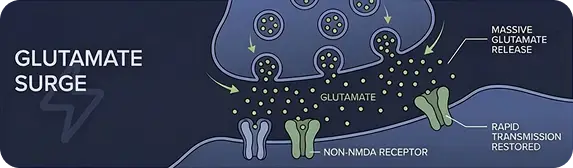
Most antidepressants adjust serotonin and norepinephrine levels. These neurotransmitters, or brain chemicals, are responsible for mood and energy. Meaningful symptom relief typically takes two to six weeks, and for a significant portion of patients, it never fully sets in. Ketamine works on a different system entirely. It prompts a surge of glutamate, the brain’s most abundant excitatory neurotransmitter. This helps to restore communication between brain cells and relieve symptoms within hours to a few days.
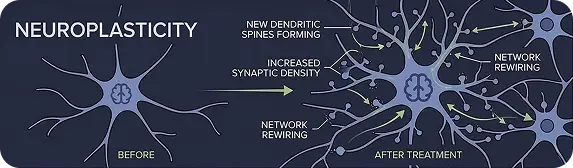
The glutamate surge promotes the growth of new synaptic connections between brain cells — a process called neuroplasticity. This temporarily increases the brain’s ability to “rewire” and form healthier patterns of thought and emotional response.
Clinically significant for patients experiencing severe depression or suicidal thinking.
- Glutamate
- NMDA receptor
- New pathways
- Onset of relief
- Primary mechanism
- Neuroplasticity effect
- Serotonin
- Dopamine
- Onset of relief
- Primary mechanism
- Neuroplasticity effect
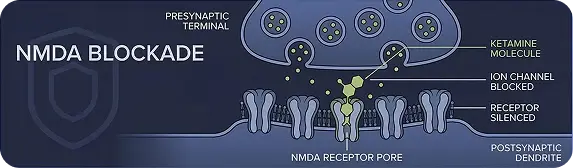
STEP 1
NMDA blockade
STEP 2
Glutamate surge
A rapid release of glutamate restores communication between brain cells. This allows quick symptom relief.
STEP 3
Neuroplasticity
New synaptic connections form. The brain becomes more adaptable, allowing it to rewire patterns of thought and mood.




Ketamine therapy is supported by a substantial body of clinical evidence and referenced by major medical organizations that oversee psychiatric treatment standards.
What the research shows
Ketamine is not an experimental treatment. It has been the subject of thousands of scientific papers and hundreds of registered clinical trials for depression alone — Ketamine is among the most extensively studied novel treatments for depression over the past two decades.
Approximately 30% of people with major depressive disorder (MDD) do not achieve adequate relief from standard antidepressants. This condition is known as treatment-resistant depression (TRD). In a large clinical study of people with treatment-resistant depression, nearly 70% of patients on Spravato achieved a clinical response, and more than half achieved remission.
Popova et al. — American Journal of Psychiatry 2019
Early improvement was associated with greater antidepressant effects following a course of 4 ketamine infusions. However, individuals who did not show early improvements still had a high likelihood of experiencing clinically significant symptom reduction after the 4th infusion.
Ionescu et al. — Biological Psychiatry 2020 Grunebaum et al. — Psychological Medicine 2018
Most patients find that Spravato maintenance sessions every 2–4 weeks help them maintain long-term benefits following a full induction treatment. In two major long-term studies, 46% of patients on Spravato remained in remission during maintenance treatment, with sustained benefits and no new safety concerns identified during long-term treatment of up to 4.5 years.
Ketamine vs. other treatments
Patients considering ketamine often do so after other treatments have not provided sufficient relief. The comparisons below show how ketamine performs alongside other commonly used treatment options.
then 1-2x/month
then 1x/month
then 1-2x/month
then 1-4x/month
during treatment
during treatment
- Most plans
- Most plans
- Most plans
- Most plans
- Yes
- Yes
- Yes
- Yes
- Yes
- Yes
Typical treatment outcomes

Initial response
Many Spravato® and IV ketamine patients notice a shift in mood the same day as their first session.
Sustained improvement
Spravato® and IV ketamine patients typically report improvements within the first 2-4 weeks.
Consolidated gains
Produces sustained improvements in symptoms and quality of life — with gains maintained over 5 years with continued treatments.
Significant reduction in depression symptoms such as low mood, mental fog, and loss of interest
Improved energy and motivation — often one of the first changes patients notice
Reduced frequency and intensity of intrusive or suicidal thoughts
Emotional responsiveness returning — reconnecting with people and activities
Treatment options
Spravato®
Esketamine nasal spray
- FDA-approved for treatment-resistant depression
- Based on a ketamine derivative
- In-clinic treatment under physician supervision
- Insurance-covered
- Most patients pay $0–$50 per visit, after insurance coverage and available assistance programs.
IV ketamine
Intravenous ketamine infusion
- Treats depression, anxiety, PTSD, OCD, postpartum depression, AUD, and other mental health disorders.
- Available to patients not eligible for Spravato
- Delivered under physician supervision
- Self-pay treatment
- $500 per session

Combining therapy and ketamine treatment
Safety
Ketamine has a reputation outside clinical settings, which can make patients understandably cautious. In medical use, however, ketamine is administered in precise doses under controlled conditions, where its safety profile is well established.
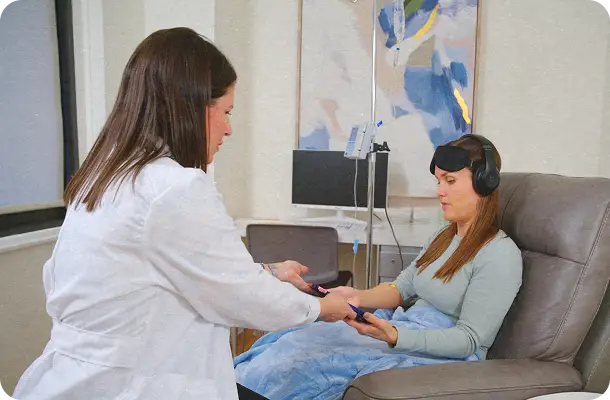
At Keta Medical Center, every ketamine session — whether IV ketamine or Spravato — takes place under direct physician supervision. Emergency medicine physicians and nurses monitor each treatment from start to finish, ensuring patient safety and comfort throughout the process.
FAQs
The induction period includes six to eight sessions over three to four weeks. Many patients notice improvement after one to two sessions, though some experience a more gradual response across the full course. With Spravato, the second month of treatment includes one 2-hour session per week. During and after induction, a physician works with your providers to create a personalized treatment and maintenance plan.