

FAQ’s
Yes, when administered under medical supervision by trained physicians, ketamine therapy is safe. At Keta Medical Center, our team is led by emergency medicine physicians with extensive training, ensuring that every treatment adheres to the highest standards of medical safety.
Side effects may include mild nausea, dizziness, feelings of dissociation, anxiety or increased blood pressure. These typically resolve shortly after the treatment session. Our medical team monitors patients closely to manage any side effects effectively.
Esketamine (Spravato) Nasal Spray is covered by most insurance plans. IV ketamine infusions are not typically covered.
The duration of symptom relief varies. Many patients experience significant improvement in their symptoms for several weeks to months after completing their initial series of treatments. Ongoing maintenance sessions can help prolong these benefits.
It is not safe to drive immediately following a ketamine session. You may feel disoriented or drowsy for a few hours after treatment, so please arrange for someone to drive you home. Some patients find they need time to rest and recover after a session, so we recommend not scheduling any demanding tasks immediately afterwards. While many patients return immediately to light activities, everyone’s recovery time varies. We offer flexible hours, including evenings and weekends, so you can find a time that works best for your schedule.
Our treatments are particularly beneficial for patients with mood disorders such as depression, PTSD, and certain anxiety and addiction disorders, especially those who have not responded well to traditional treatments.
Unlike many clinics, Keta Medical Center is led by board-certified emergency medicine physicians. Every treatment session is overseen by a physician, ensuring high medical standards. Plus, our clinic is designed to provide a warm and supportive environment, recognizing the vulnerability of our patients.
We offer two main types of ketamine therapy: IV ketamine infusion and nasal spray treatment with Spravato, which is FDA-approved for treatment-resistant depression.
We provide private rooms, flexible scheduling, and attentive care to ensure each patient's comfort and privacy. Our administrative staff is trained to offer warm, empathetic care, making our patients feel supported throughout their treatment.
Most often, yes. We typically recommend continuing your current medications, but we'll discuss your specific medications during your initial consultation to ensure safety and efficacy.
We conduct a thorough initial assessment and follow-up evaluations to monitor the impact of the treatment on your symptoms. Patient feedback and improvements in clinical scales guide the personalization of ongoing treatment plans.
Your first session will begin with a consultation with one of our physicians to review your medical history and discuss your treatment plan. During the treatment, you'll be in a comfortable setting with continuous monitoring by our medical team. Ketamine infusion sessions typically last between 40 to 50 minutes and Spravato sessions last 2 hours. Patients often start feeling the effects shortly after.
Many patients report improvement in their symptoms within hours of their first session. The response varies by individual, but rapid relief is a key benefit of ketamine therapy, especially for those with treatment-resistant conditions.
We adhere strictly to HIPAA guidelines and take every precaution to protect your privacy and confidentiality. Your personal and medical information is always treated with the utmost discretion.
Yes, ketamine therapy can be an excellent complement to psychotherapy, particularly for conditions like depression and PTSD. We encourage coordinated care and can work with your existing mental health provider to optimize treatment outcomes. We also offer Ketamine Assisted Psychotherapy with our partners to augment the treatment benefit.
IV Ketamine is not FDA approved for depression. It is used off label for depression and other mental health conditions because of studies showing clinical benefit. Spravato (Esketamine) is FDA approved for Treatment Resistant Depression.
IV Ketamine is a racemic mixture of two enantiomers, (S)-ketamine and (R)-ketamine. Spravato is the S-enantiomer form of ketamine.
Ketamine has a history of being used as a “party drug” because of its dissociative effects. When purchased illicitly, it can result in addiction or abuse. However, when administered in a medical office setting by experienced physicians, the risks of addiction are very low.
It's possible that alcohol may decrease the antidepressant efficacy of ketamine, so we recommend not drinking the night prior to or after the treatment session. Please avoid heavy drinking, and please try to get a good night's rest.
- If you really want to have a small glass of wine because it's a special occasion, then we advise you to be careful and limit yourself to one drink. This is not recommended for elderly patients or patients who require additional monitoring or experience prolonged side effects from the Spravato treatments.
Yes! It's fine for you to use over-the-counter nasal decongestants if you need to. We recommend at least 1 hour prior to Spravato administration. You are also welcome to blow your nose before administering Spravato.
Once your mood has improved and remains stable, we can start decreasing the frequency of treatments. We do recommend staying on some maintenance schedule, even if infrequent, as studies show that patients who stay on maintenance dosing have more stable moods and less relapse into depressive episodes than those who do not.
We understand new stressors and unexpected life events can occur, and we want to work with you to help improve your mood and keep it stable. If you notice a dip in your mood, we may recommend increasing the frequency of treatments back to weekly until you improve. We may also suggest re-induction if your insurance allows.
We do not recommend self-discontinuing your oral antidepressant and/or other psychiatric medications, and recommend that you follow up with your psychiatrist if you would like to consider tapering off or discontinuing your oral medication.
It may take a few sessions to a few weeks for ketamine to rewire neural connections in the brain, so we hope to see improvement by the end of the induction (The induction period is 4 weeks for Spravato, and 3 weeks for IV). For Spravato, we recommend continuing with the medication for the first 2 months to give it the full time to work.
We really hope these treatments will help improve your symptoms. Unfortunately, not every single patient will improve.
For Spravato, we recommend trying the medication for the first 2 months. After the initial induction, if there is minimal or no improvement, we may recommend re-induction if your insurance allows. By the end of the first 2 months, if there is no improvement or benefit, we advise you to follow up with your psychiatrist to consider other alternative treatments.
For IV, we recommend completing the induction phase (twice a week treatments for 3 weeks). If there is no improvement by the end of induction, we advise you to follow up with your psychiatrist to consider other alternative treatments. If you feel that there is mild improvement but not significant, and would like to try the medication for a bit longer, we can consider extending induction (another 1-2 IVK sessions); however, please be aware that extending induction does not guarantee improvement.
Yes, after completion of Spravato induction without improvement of symptoms, we can consider switching to IV ketamine. We can also consider interspersing IV ketamine and Spravato in an individualized plan. Please be aware that IV Ketamine is not covered by insurance and is out of pocket, costing $500 per treatment session.
Unfortunately, a common side effect of the Spravato treatment is a bad, bitter, or metallic taste after the nasal administration. We do have mints and chocolate in the office to help counter this, and the bad taste typically resolves by the end of the session.
While marijuana use is not an absolute contraindication, we discourage its use. Please refrain from marijuana use the night before or day of the treatment session. Additional info: Marijuana use may increase risk of sedation, dizziness, dissociation, and cognitive impairment; there have also been case reports of increased risk of rhabdomyolysis and psychosis.
There are currently no official guidelines on how long a patient should stop treatments for before trying to conceive. We suggest discontinuing treatments for at least 2 weeks. Please also inform your OB/GYN doctor for further recommendations.
Our Facilities

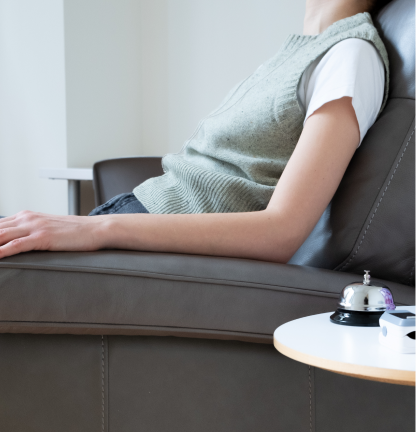



Our Facilities
Our Facilities

forbes
Read about Dr. Cheryl Malina's discussion with Forbes about the benefits of ketamine therapy.
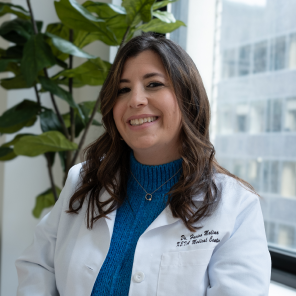
Two Idiots and an Expert podcast!
Listen to Dr. Haviva Malina talk about Ketamine therapy for mental health disorders.
See if Ketamine Is Right for You
We know life is busy, so at Keta Medical Center, we offer evening and weekend hours to fit your schedule. Our friendly administrative staff is always available to answer your questions and address any concerns. Our goal is to support you as you embark on your mental health journey with ketamine therapy.